
 The Devil
Looking at constraints in context
Name a constraint or repeated pattern without blaming yourself for being in it.
Card imagery and meaning
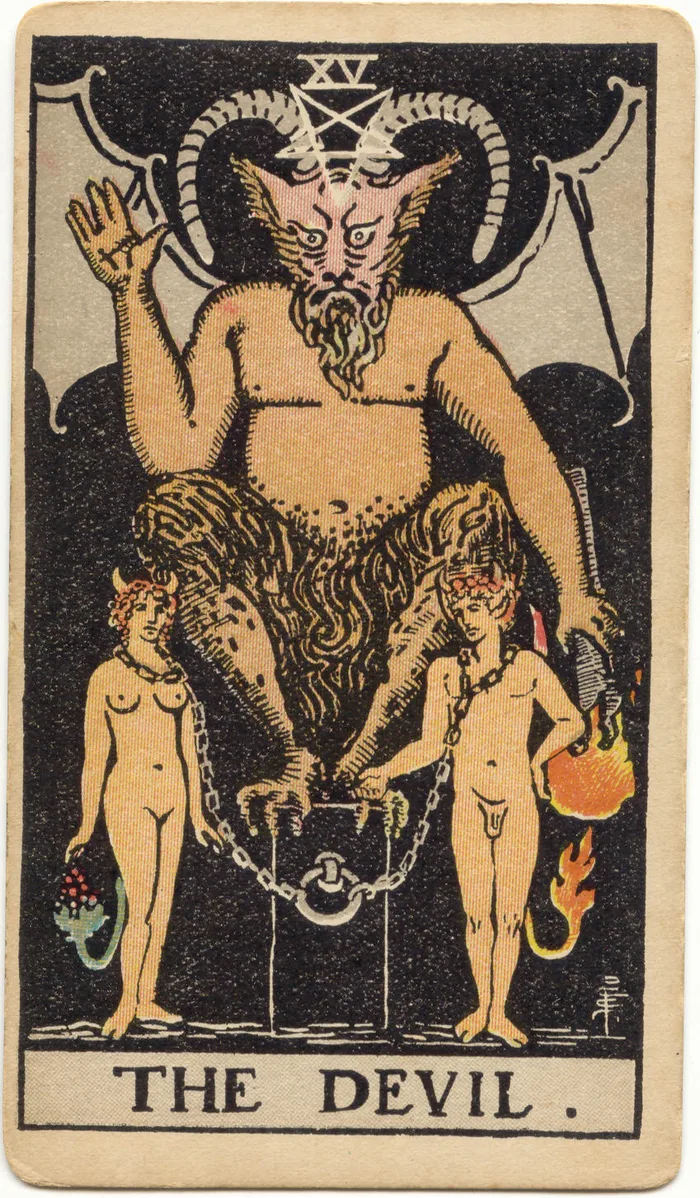
Two figures stand in chains beneath a horned figure.
The image is a scan of the original 1909 deck illustrated by Pamela Colman Smith. Separate what you can observe in the drawing from the interpretation you bring to it. The questions below are modern reflection exercises.
Upright and reversed meanings
The reversed meanings below are modern reflection prompts rather than a single traditional rule. Our card-drawing tool uses upright cards only.
More columns → Swipe sideways, or focus the table and use the arrow keys.
| Orientation | A useful lens | Before you interpret |
|---|---|---|
| Upright | Name a constraint or repeated pattern without blaming yourself for being in it. | Does this question match the facts of your situation? |
| Reversed | Consider which support, information or change in conditions could loosen a pattern. | Look for too much of this quality, too little of it, or a different angle. Do not simply flip the upright meaning into its opposite. |
Look closer at the card
Card imagery and meaning
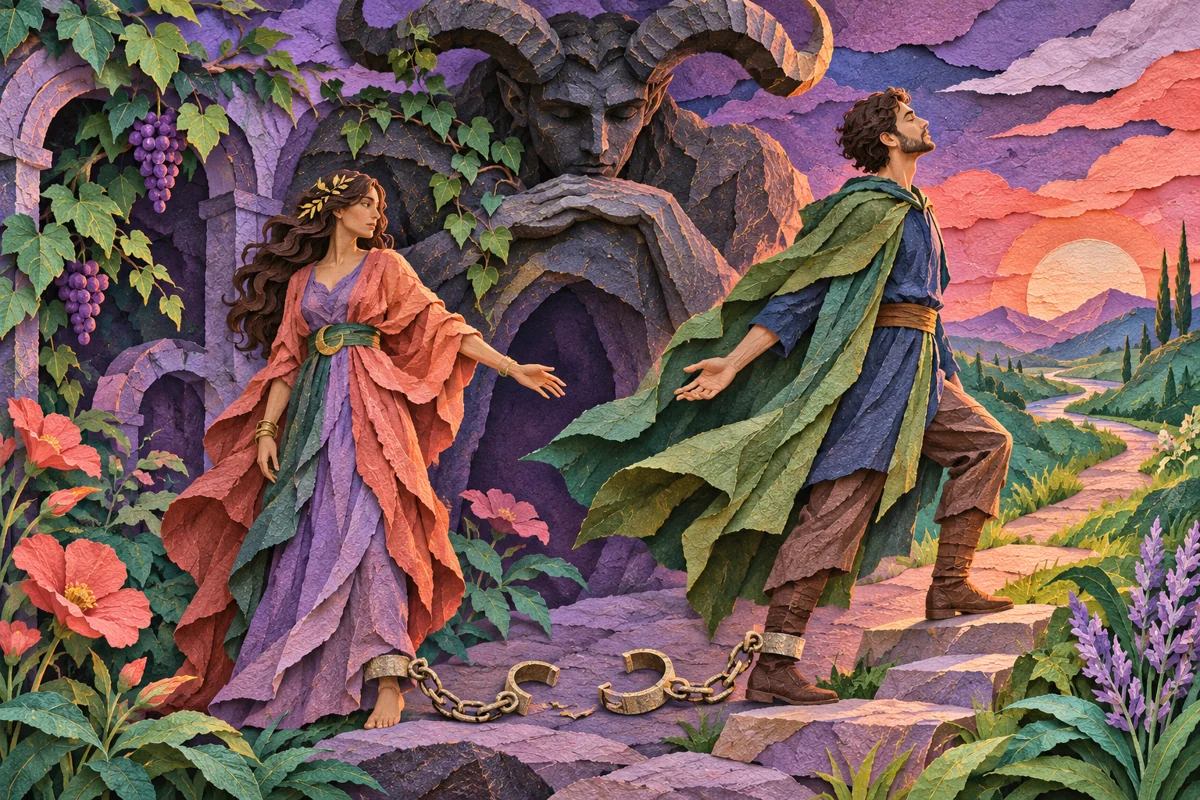
Two figures stand in chains beneath a horned figure.

Read the spread position alongside the card
More columns → Swipe sideways, or focus the table and use the arrow keys.
| Position | Question to explore | What to record alongside it |
|---|---|---|
| Situation | What limits my choices, and what support do I have? | Write down the specific fact or event that prompted your question. |
| Obstacle | Am I making too much of these constraints, ignoring them, or focusing on an issue that does not apply here? | Several interpretations may fit, or none at all. |
| Action | Consider outside systems and incentives alongside personal habits. | Pick a low-risk action you can undo, and watch what happens. |
| Reflection | How did your view of these constraints change? | Compare your original notes with what actually happened. |
Practice scenario
Fictional situation: You keep agreeing to work later than you planned.
Try this: Write down what makes it hard to say no, whether that is outside pressure, unclear expectations, or practical dependence. Then name one source of support and one boundary you can negotiate.
Check the interpretation: Ask yourself what limits your choices and what support you have. If that question does not fit your situation, set it aside. You do not have to force every card you draw to fit an explanation.
An illustrative learning summary for exploring potential limitations in a fictional work scenario.
- Identify pressure
Write down specific reasons you find it hard to say no, such as external pressure, unclear expectations, or practical dependence on your job.
- Set boundaries
Determine one source of support you can rely on and identify one boundary you can negotiate to improve your current work situation.
- Apply critically
If the card interpretation does not fit your specific situation, set it aside. You do not have to force every card explanation.
Relationships and work
Relationships: Being in a hard situation does not prove that you chose it or deserved it.
Work and practice: Consider outside systems and incentives alongside personal habits.
Comparing The Devil and The Emperor
A helpful boundary is different from a structure that holds you back.
Read The EmperorQuick exercise
Write one sentence stating the facts of your situation. Next, answer this question: “What limits my choices, and what support do I have?” Underline any part of your answer that is an assumption rather than a direct observation.
See an example of fact vs. assumption +
“The deadline changed” is an observation. “This means my work is not valued” is an interpretation. That thought might be worth discussing, but a tarot card cannot prove it is true.